
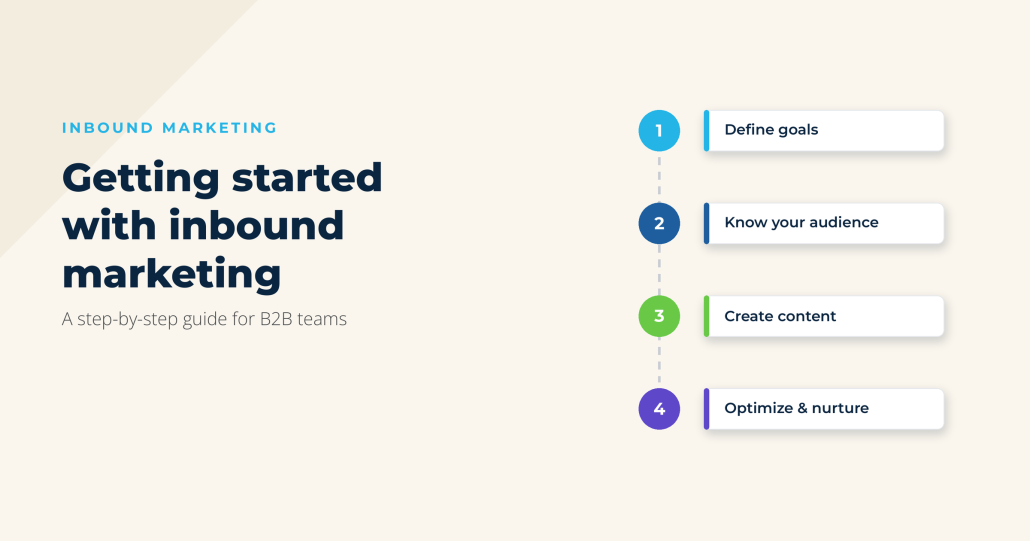
How to Get Started with Inbound Marketing

Getting started with inbound marketing means defining your goals, understanding your audience, creating helpful content, and optimizing that content for search and AI answer engines, then nurturing the leads it attracts until they’re ready to buy. It replaces interruption-based advertising with content that earns attention on its own, and it works because it matches how B2B buyers actually behave today: researching independently, comparing options, and forming an opinion about your business long before they ever fill out a contact form.
Bombarding potential customers with intrusive ads and aggressive sales tactics is no longer the go-to strategy to generate leads and grow pipeline. Instead, businesses are embracing a more subtle, helpful approach to build brand awareness and earn new business. That process is inbound marketing, and unlike a single campaign, it’s a system you build once and keep compounding. This guide walks through what inbound marketing is, why it works, and the concrete steps to get started, whether you’re launching your first program or replacing a patchwork of one-off tactics with something more connected.
What is inbound marketing?
Inbound marketing creates valuable content and experiences tailored to your target audience’s needs and interests. Unlike traditional marketing methods that push messages out to a broad audience, inbound marketing focuses on attracting customers through relevant, helpful content. This approach builds trust and credibility, and it turns that trust into long-term relationships with your audience.
The methodology breaks down into four connected stages: attract, engage and nurture, convert, and delight. Attract brings the right buyers to your content through search and AI answer engines. Engage and nurture builds trust while buyers compare options. Convert turns engaged readers into qualified leads. Delight keeps customers successful after the sale, so they become repeat buyers and referral sources, which feeds the next round of attraction. For a deeper breakdown of the methodology and how the stages connect, see our full guide to inbound marketing.
Why consider inbound marketing?
Imagine potential customers seeking you out rather than the other way around. That’s the appeal of inbound marketing: a strategy that draws people in through engaging content, whether that’s a helpful blog post, an insightful video, or a well-timed social post. Here are the main reasons to add inbound marketing to your strategy:
- Cost-effectiveness. Inbound marketing can be more cost-effective than traditional advertising. Creating quality content and nurturing leads often requires less ongoing investment than running multiple ad campaigns, and the content itself keeps working long after it’s published, unlike an ad that stops the moment the budget runs out.
- Increased trust and credibility. By providing valuable information and solutions, you position your brand as an industry authority, building trust with your audience before they ever talk to sales. A buyer who has already learned something useful from your content arrives at a sales conversation pre-sold on your expertise, not skeptical of a pitch.
- Better audience targeting. Inbound marketing lets you reach the right people on the right platforms, so your message resonates with the buyers most likely to convert. Rather than paying to interrupt a broad audience, you’re answering the specific questions your ideal buyer is already typing into a search bar or an AI tool.
For a closer look at how the two approaches compare side by side, see inbound vs. outbound marketing: differences, examples, and where to spend.
How to get started with inbound marketing: a 7-step guide
Getting started doesn’t have to be complicated. A clear strategy and consistent execution get you most of the way there. Each step below builds on the one before it, so treat this as a sequence rather than a menu to pick from.
1. Define your goals
Begin by outlining what you want to achieve with your inbound marketing efforts. Are you looking to increase website traffic, generate more leads, or build brand awareness? Clear objectives guide your strategy and give you a way to measure success.
Get specific here rather than settling for a general direction. “Grow traffic” is a starting point, but “generate 20 qualified leads per month from organic search within six months” gives you something you can actually plan against and report on. Write your goals down, tie each one to a number and a timeframe, and revisit them quarterly as your program matures.
2. Understand your audience
Who are you trying to reach? Understanding your target audience is essential for creating content that resonates. Develop detailed buyer personas covering your ideal customers’ demographics, preferences, and pain points.
For B2B companies, this usually means going beyond a single persona. Most B2B purchases involve multiple stakeholders, each with different concerns: a technical evaluator wants proof it works, a finance stakeholder wants to understand cost and ROI, and an executive sponsor wants to know it solves a strategic problem. Map out who these people are for your business and what questions each of them needs answered before your content plan will actually convert.
3. Create quality content
Content is the backbone of inbound marketing. Develop a mix of formats, including blog posts, videos, ebooks, high-quality backlinks, and infographics, that address your audience’s real questions. Make sure it’s engaging, informative, and easy to share.
The most reliable way to generate content ideas is to listen to the questions your sales team already hears every week. If prospects keep asking the same three or four questions on discovery calls, those questions are proven demand, and turning each one into a piece of content gives you a head start on relevance. Aim for a mix: some content that answers narrow, specific questions (which tends to rank well and get cited by AI tools), and some longer pillar content that establishes broader authority on a topic.
4. Optimize for search and AI visibility
Search engine optimization is key to making your content discoverable. Research the terms your audience actually searches for, and work them naturally into your content, meta tags, and URLs. Increasingly, that content also needs to be structured for AI answer engines like ChatGPT and Google AI Overviews, which reward clear, direct-answer formatting the same way search engines reward strong on-page SEO.
In practice, this means opening sections with a direct answer to the question in the heading, rather than building up to it. It also means using clear, specific language instead of vague marketing phrases, since both traditional search algorithms and AI models reward content that answers a question plainly and completely. If you want a clearer read on where your own content stands today, our free AI visibility audit shows you where you’re already being cited and where the gaps are, and this guide to AI search optimization breaks down the mechanics in more depth.
Pro tip: Look beyond Google for keyword research. Communities like Reddit are increasingly cited as a source in AI-generated answers, so the questions people ask there are a useful signal for what your content should address.
5. Use social media
Social platforms are valuable for promoting your content and engaging your audience. Choose the platforms where your audience already spends time, participate in real conversations, and share content consistently rather than sporadically.
Resist the urge to be everywhere at once, especially early on. A B2B audience is usually concentrated on one or two platforms, most often LinkedIn, and a consistent, focused presence there will outperform a thin, inconsistent presence spread across five networks.
6. Build lead nurturing into the process
Not every visitor converts immediately. Build lead-nurturing sequences, such as email workflows and personalized content, that guide prospects through the buyer’s journey and keep your brand top of mind until they’re ready to talk.
This is where a CRM and marketing automation platform earn their keep. Ariad Partners implements and optimizes HubSpot for exactly this kind of connected nurturing, so email, lead scoring, and CRM data all work off the same information. Segment your list based on what a lead has already shown interest in, and send follow-up content that goes deeper on that specific topic rather than a generic newsletter. A lead who downloaded a guide on pricing strategy should hear from you differently than one who downloaded a guide on implementation timelines.
7. Analyze and adjust
Regularly review how your inbound marketing is performing. Use analytics tools to track website traffic, engagement, and conversion rates, and use what you learn to refine your strategy and improve future content.
Set a recurring monthly or quarterly review where you look at which content is actually producing leads, not just traffic, and double down on the topics and formats that are working. Inbound marketing rewards this kind of ongoing refinement; a program that never revisits its own data will plateau well below what a program that iterates can achieve.
Common Questions
How long does it take to see results from inbound marketing?
Do I need a large team to start with inbound marketing?
What’s the difference between inbound marketing and content marketing?
What tools do I need to get started with inbound marketing?
How to get started with inbound marketing
Inbound marketing is a dynamic, compounding approach to earning attention rather than buying it. By focusing on valuable content and real relationships, you can attract, engage, and convert customers without the hard sell. The seven steps above work whether you’re starting from nothing or restructuring an existing effort that’s grown into disconnected pieces. What matters most is treating inbound as a system rather than a one-time checklist. If you want help building a full inbound program rather than a single campaign, see how Ariad Partners approaches inbound marketing services.



Leave a Reply
Want to join the discussion?Feel free to contribute!