
Generative Engine Optimization (GEO): Why It Matters in the Age of AI Search

For many years, companies focused on SEO—Search Engine Optimization to get found online. The idea was simple: people typed questions into Google, and Google displayed a list of website links. If a company ranked high, they received more traffic.
But the way people search has changed. Today, more buyers are using AI search tools such as ChatGPT, Perplexity, Claude, and Gemini. Instead of returning a list of links, these tools generate a natural-language answer. Google is already moving in this direction through AI Overviews.
This shift creates a new reality:
The goal is no longer just ranking high. The goal is to be selected as a source.
That approach is called Generative Engine Optimization (GEO).
GEO focuses on producing content that AI models can read clearly, parse correctly, and reuse confidently in their answers. SEO helps humans find you.
GEO helps AI choose you.
Why Generative Engine Optimization (GEO) matters for B2B SMBs
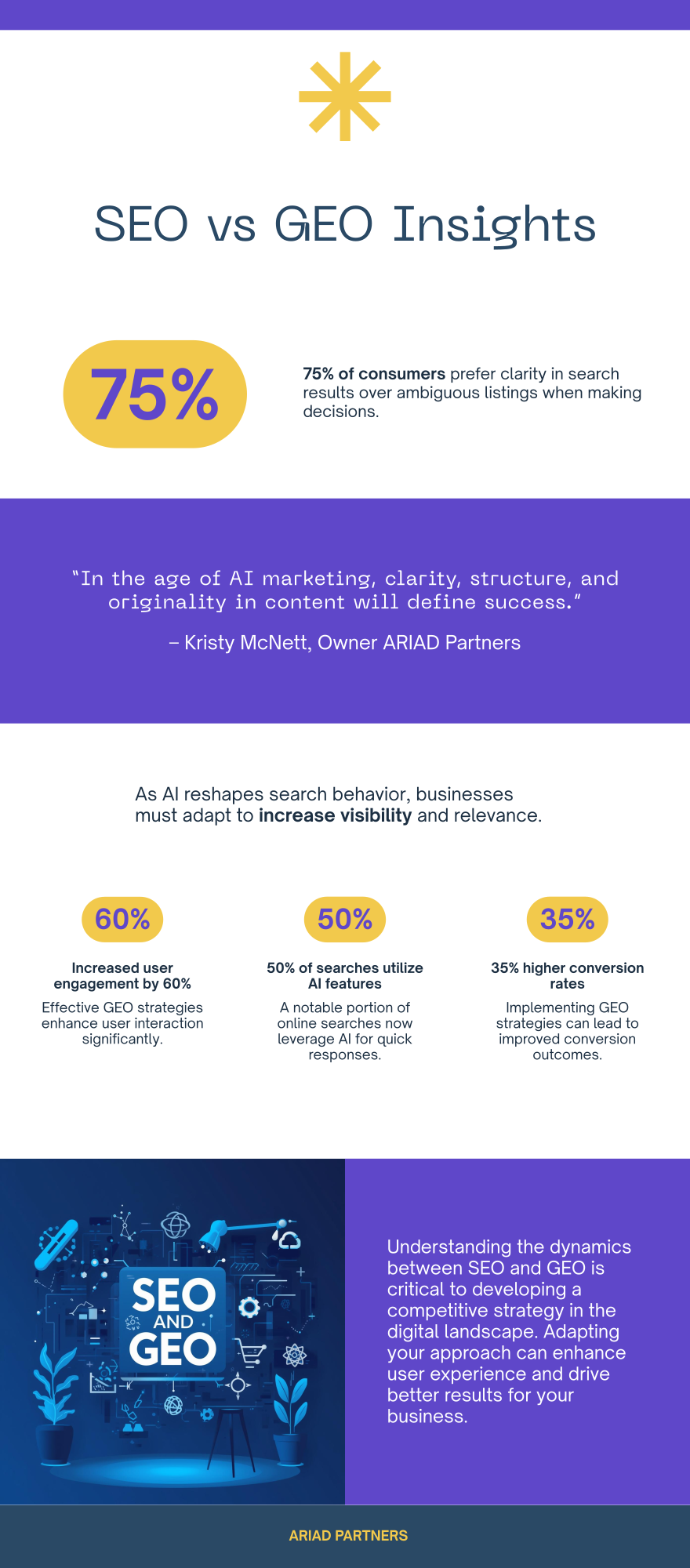
A major shift is happening in how buyers research solutions—especially in the B2B industry sector. Buyers begin their research earlier, faster, and across more AI surfaces. SaaS companies see this clearly: demo requests still arrive, but analytics show fewer website pages viewed beforehand.
This means buyers are learning somewhere else before they click. Increasingly, that “somewhere else” is an AI-generated summary.
This is why Generative Engine Optimization is no longer optional. GEO protects your discoverability in a world where AI search experiences are becoming the first—and sometimes only—research step in the journey.
GEO vs. SEO — What’s actually different?
Think of it this way:
- SEO focuses on visibility.
- GEO focuses on selectability.
SEO gets you into the list. GEO gets you to the answer.
To appear inside AI-generated responses, content must be written differently.
Winning GEO content is:
- clear
- direct
- well structured
- easy for models to quote
Companies such as HubSpot, Notion, and Monday.com appear frequently in AI results—not because they publish more, but because their content structure is easy for AI models to parse, classify, and reuse.
Three Places Generative Engine Optimization Matters Most
1. AI search engines ChatGPT, Perplexity, Claude, and Gemini gather information from many sources to form a final answer. They may quote your content directly or use your ideas indirectly.
2. Google AI Overviews
Google now summarizes answers at the top of search results. Many users may never scroll past the summary—so the true win is being used in the overview.
3. AI model inference
Models learn patterns from text. Even when they don’t link to you, they may reuse your language internally as part of their knowledge foundation.
This means GEO goes beyond search engine optimization. It is about becoming part of the information the model repeats.
GEO changes how we write content
Traditional SEO rewarded cleverness and keyword tricks at times. GEO rewards clarity. AI models don’t like vague language or fluffy marketing language. They need:
-
-
- clear definitions
- short sentences
- well-labeled sections
- direct answers to questions
-
GEO content should feel almost like a helpful guide or handbook—not a pitch. It should look like something someone could learn from—even if they only read one section.
How GEO strengthens the revenue engine
In mid-market SaaS, the buying process is long, complex, and research-heavy. GEO—like high-quality HubSpot Services—helps companies influence buyers earlier, before the click.
This shortens sales cycles by building trust sooner.
It also introduces a new success metric. Instead of asking:
“How many organic sessions did we get?”
Companies will ask:
“How often does our language appear in generative answers?”
That will become the next visibility metric.
GEO and content quality
GEO requires marketers to do something many brands avoid: say things clearly.
Soft, vague, overly “brand-safe” writing does not work in AI systems. AI does not reward ambiguity.
The clearer your language is, the more likely AI will reuse it.
Clear, strategic inbound marketing language becomes a competitive advantage.
Where GEO is Heading Next
Over the next few years, GEO will likely become the default structure used in content planning. It will not kill SEO — it will live next to it. Think of GEO as the next layer of search.
-
-
- SEO makes you visible to humans
- GEO makes you usable by machines
-
Both matter. But GEO is the newer advantage. Teams that adopt it earlier will build stronger authority in AI search — because they will become the “example language” that models select when answering questions.
Final thought
Marketing teams don’t need more content.
They need stronger content—content clear enough for humans to understand and structured enough for AI to reuse.
GEO ensures that your ideas show up not just on your website, but inside the answers buyers see first. Authority in the next era of search will compound through clarity, not volume.
Ready to maximize your content and enter the future of marketing? Download our Free GEO Checklist!