Inbound marketing services help you attract qualified buyers by offering them relevant and useful information — connecting with them on the channels they frequent most, instead of interrupting them with ads or cold outreach. With strategic content, SEO, AI-assisted insights (LLMs), and marketing automation, inbound builds trust, increases visibility, drives more organic traffic, nurtures leads throughout their journey, and ultimately increases revenue.
Is inbound marketing still effective?
Yes — inbound marketing is still relevant in 2025, but the way we do it has evolved. Today, the companies seeing the best results aren’t just blogging for traffic — they’re combining content, SEO, social, marketing automation, and AI into a connected strategy that actually meets buyers where they live and research online and continuously learns and adapts with their prospects and their buying behaviors. When those pieces work together, inbound continues to drive high-quality leads and builds trust that lasts long after the first conversion.
What are the four stages of inbound marketing?
1) Attract
This is where you get on your buyer’s radar. You create genuinely helpful content — blogs, SEO pages, videos, social posts — so people can find you while they’re researching on their own. It’s about earning attention, not forcing it.
2) Convert
Once someone is engaged, you provide them with a way to raise their hand — a guide, a webinar, a template, or a demo request — something valuable enough that they’re willing to share their information. This is where “anonymous website visitor” becomes an actual contact in your CRM.
3) Nurture
Now the relationship starts. You stay connected with emails, content, case studies, and personalized touchpoints that help them learn, evaluate, and feel more confident in their decision. You’re not pushing — you’re guiding them through the messy middle.
4) Close (and Grow)
When they’re ready, sales steps in — and because marketing has set the stage, the conversation is warmer, faster, and easier. And once they become a customer, inbound doesn’t shut off. You keep showing up with value — for retention, upsell, referrals, reviews. It becomes a relationship, not just a transaction.
What is B2B Inbound Marketing?
B2B inbound marketing is a strategic approach that attracts business buyers by creating helpful, relevant content that answers their questions and provides solutions to solve their problems. It uses SEO, thought leadership, email nurturing, and marketing automation to build trust over time, so prospects come to you when they’re ready — not because you chased them. The goal is to turn strangers into qualified leads and qualified leads into revenue by meeting buyers where they are in their research and decision-making process.
Why are B2B organizations considering inbound marketing?
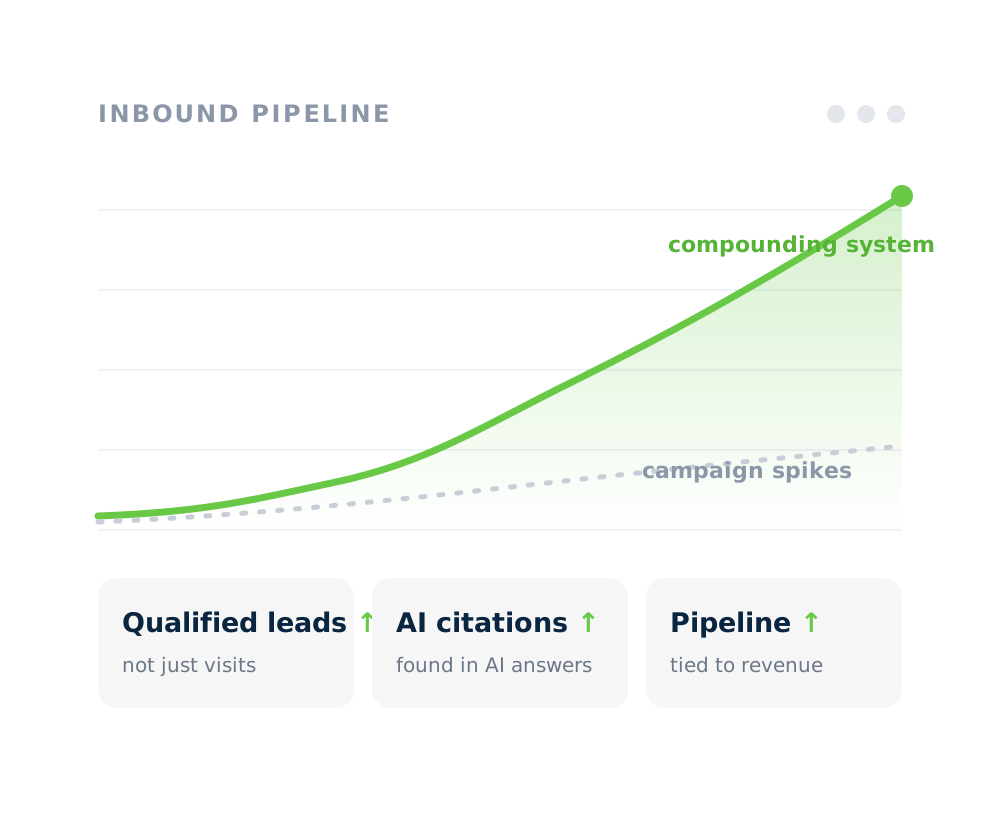
B2B companies are shifting to inbound marketing because buyers are now in control of the sale — they want to explore and purchase on their own terms. Buyers research quietly now. They use Google, ask AI, read articles, consult peers, and build their own understanding before agreeing to a sales call. Inbound marketing tactics support that behavior instead of fighting against it. It helps companies show up in those research moments, build trust early, and become the obvious choice when someone is ready to talk. More and more B2B organizations are realizing they want to invest in their website and its content as a long-term asset, rather than relying solely on PPC. Inbound is a marathon, but the ROI compounds — and it drives higher-quality leads without requiring constant scaling of the sales team.
Do you only work with the industries listed on this page?
No. The industries here are where we have the deepest experience, but the common thread is a complex B2B sale. If you sell to businesses and want to increase revenue, we’re happy to talk.